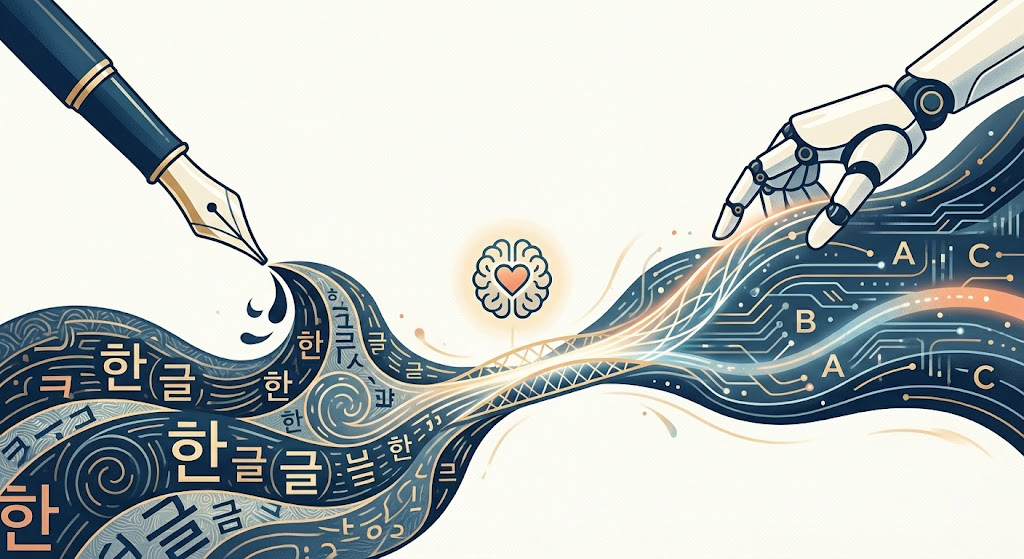
AI 번역, 한 번쯤 해보셨을 겁니다.
결과물이 어떤가요? 솔직히 꽤 훌륭합니다. 문법도 완벽하고, 누가 봐도 ‘소설’처럼 매끄럽게 번역해 줍니다.
그런데 읽다 보면 뭔가 아쉽습니다.
분명 뜻은 맞는데, 내 글 특유의 ‘맛’이 안 납니다. 내가 쓴 글은 좀 더 거칠고 툭툭 던지는 느낌인데, 번역본은 지나치게 친절하고 점잖습니다. 혹은 나는 아주 감성적이고 호흡이 긴 문장을 썼는데, AI는 그걸 딱딱 끊어서 깔끔하게만 정리해 놨죠.
마치 내 개성을 ‘다림질’해버린 느낌이랄까요.
이건 AI가 못해서가 아닙니다. AI는 기본적으로 ‘누가 읽어도 무리 없는, 가장 표준적인 영어 소설 문체’를 내놓도록 훈련받았기 때문입니다. 별다른 지시가 없으면 내 문체의 뾰족한 부분들을 다 깎아서 둥글둥글하게 만들어 버립니다.
내 문체의 개성, 그 삐딱하거나 감성적인 느낌을 살리려면? AI에게 “번역해”가 아니라 “내 스타일을 흉내 내”라고 시켜야 합니다.
어떻게 시키냐고요? 프롬프트에 딱 3가지만 추가하면 됩니다.
1. 내 글의 ‘톤(Tone)’을 정의해 주기
본인 글이 어떤 스타일인지 아시나요?
헤밍웨이처럼 건조하고 짧은지, 아니면 만연체로 화려하게 수식하는지. 이걸 영어 형용사로 정의해서 프롬프트 첫 줄에 박아줘야 합니다.
그냥 “Translate this”라고 하지 마세요. 이렇게 해보세요.
“Translate this novel into English.
Style: Dry, cynical, noir style. Use short, punchy sentences. (건조하고, 냉소적인, 느와르 스타일. 짧고 강렬한 문장 사용.)”
만약 로맨스라면?
“Style: Emotional, lyrical, soft tone. Focus on the character’s inner feelings. (감성적이고 서정적인, 부드러운 톤. 인물의 내면 감정에 집중.)”
이 한 줄이 번역의 결을 완전히 바꿉니다.
2. AI에게 내 문체를 ‘분석’ 시키기 (역발상)
내 문체가 ‘건조한 하드보일드’인지, ‘서정적인 낭만주의’인지 영어로 정의하기 어려울 때가 있습니다. 영어 예문을 만드는 건 더더욱 어렵고요.
그럴 땐 고민하지 말고 AI에게 먼저 물어보면 됩니다. 순서만 바꾸면 해결됩니다.
“일단 이 한국어 글을 읽고, 분위기를 파악해 봐. 그리고 이 느낌을 가장 잘 살릴 수 있는 영어 문체를 네가 결정해.”
이렇게 ‘선 분석, 후 번역’을 시키는 프롬프트입니다.
Step 1. Analyze the Style Read the following Korean text. Analyze its writing style, including tone, sentence length, rhythm, and emotional temperature. (다음 한국어 텍스트를 읽어라. 어조, 문장 길이, 리듬, 감정 온도 등 문체 스타일을 분석해라.)
Step 2. Define English Persona Based on your analysis, define the most suitable English writing style to match the original nuance. (분석을 바탕으로, 원문의 뉘앙스를 가장 잘 살릴 수 있는 영어 작문 스타일을 정의해라.)
Step 3. Translate Translate the text applying that defined style. (그 정의된 스타일을 적용해서 번역해라.)
이렇게 시키면 AI가 먼저 “이 글은 짧고 냉소적인 문장이 특징이군요. 헤밍웨이 스타일로 가겠습니다.”라고 분석 결과를 내놓고, 그에 맞춰 번역을 시작합니다. 내가 일일이 지시하지 않아도 내 글의 ‘결’을 AI가 스스로 찾게 만드는 가장 똑똑한 방법입니다.
3. 금지규칙 설정하기 (Negative Prompt)
내 글 망치는 주범들을 미리 차단해야 합니다.
소설 번역할 때 AI가 자주 저지르는 실수가 있습니다. 주어를 남발하거나, 문장을 접속사(and, but)로 끝없이 이어 붙이는 거죠. 하지 말라고 못을 박아야 합니다.
Constraints (제약사항):
- Don’t use passive voice. (수동태 쓰지 마.)
- Don’t start every sentence with “He” or “She”. (문장마다 그/그녀로 시작하지 마.)
- Don’t explain, Show it. (설명하지 말고 보여줘.)
원문의 문체를 살리는 AI 번역 프롬프트 (통합본)
아래는 내 소설의 문체를 최대한 살리면서, 원문에 충실하면서도 자연스러운 영문 소설로 번역하는 프롬프트입니다.
# Role
You are an award-winning literary translator known for perfectly capturing the original author's voice and nuance.

# Task
Translate the provided Korean text into English following this 3-step process:

## Step 1: Style Analysis (Crucial)
- Read the Korean text deeply.
- Analyze tone, rhythm, sentence length, narrative distance, and emotional atmosphere.
- Output a brief style diagnosis in 1–3 sentences.

## Step 2: Translation Strategy
- Decide the English style that best matches the Korean.
- State 3–6 concrete stylistic decisions (sentence length tendencies, diction level, dialogue feel, paragraph rhythm).

## Step 3: Execution
- Translate the text applying that style.
- Make it natural to modern English readers without polishing away the original texture.

# Hard Constraints (Negative Prompt)
- Do NOT add information, explanations, or clarifying details not present in the Korean.
- Do NOT “upgrade” the voice into a neutral, elegant, or overly literary register if the Korean is blunt.
- Avoid passive voice unless the Korean is clearly passive or agentless.
- Do NOT start consecutive sentences with the same subject pattern (e.g., He/She/I + verb).
- Do NOT rely on filler transitions (However, Therefore, Moreover, Meanwhile, In fact, etc.).
- Do NOT overuse sentence-linking with and/but/so; vary structure and use hard stops where the original Korean text ends.
- Do NOT explain subtext. Show through concrete action, sensory detail, and implication only when the Korean provides it.
- Keep insult/slang/misogyny/profanity at the same intensity level as the source (no sanitizing, no intensifying).
- Preserve ambiguity. If the Korean is vague, keep it vague.

# Output Format
1) Style Analysis
2) Strategy
3) Translation (and nothing after)

# Text to Translate
(붙여넣기)
이 프롬프트를 쓰면, AI가 한글 소설의 문체를 분석하고, 번역 전략을 세운 후에 최종 번역을 합니다. 내 글의 ‘결’을 AI가 스스로 찾게 만드는 가장 똑똑한 방법입니다.